Thursday's Storm and the Valley's Low Roads
The forecast for Thursday puts a half to three quarters of an inch of rain on Hemet. That doesn't sound like much. It's plenty when it falls fast on dry ground.
The valley has seen this before. In the December 2014 storm, firefighters pulled about 40 people from their vehicles in the Hemet and San Jacinto area. Three were rescued from a car stuck in water on Soboba Road near Lake Park Drive. Gilman Springs Road closed between Sanderson Avenue and State Street after a mud and debris flow (ABC7).
The engine is your second worry. The National Weather Service cites the CDC on this. Over half of all flood drownings happen when someone drives into dangerous flood water. Six inches of fast water can knock an adult off their feet. Two feet of it can carry off SUVs and trucks (NWS).
If the water is moving, or you can't see the road under it, turn around.
What Hydrolock Does Inside the Engine
Your engine squeezes air and fuel. Air squeezes. Water won't.
Hydrolock happens when more liquid gets into a cylinder than the space left above the piston at the top of its stroke (Wikipedia). The piston comes up, hits the water, and stops. Something has to give, and it's usually the connecting rod.
How does the water get in? Through the air intake. Haynes says the intake usually sits just below the hood line, and the wave your car pushes ahead of it can reach that high (Haynes). A low cold air intake makes it easier still.
Speed decides the damage.
- At speed. Bent or broken rods, a cracked block or head, and bearing damage are common. That usually means a rebuild or a replacement engine.
- At idle or a crawl. The engine may just stop with little damage. Pull the plugs, turn it over to push the water out, and it may run again.
- Engine off. If the engine fills while it's off, like a car parked in a flooded street, it won't turn over. That usually doesn't hurt the engine. Cranking it over and over can burn out the starter.
- Diesels. High compression leaves less room at the top, so less water does it. Their torque and strong starters make the damage worse.
All four of those come from Wikipedia's hydrolock entry, and they match what Haynes describes for gas engines.
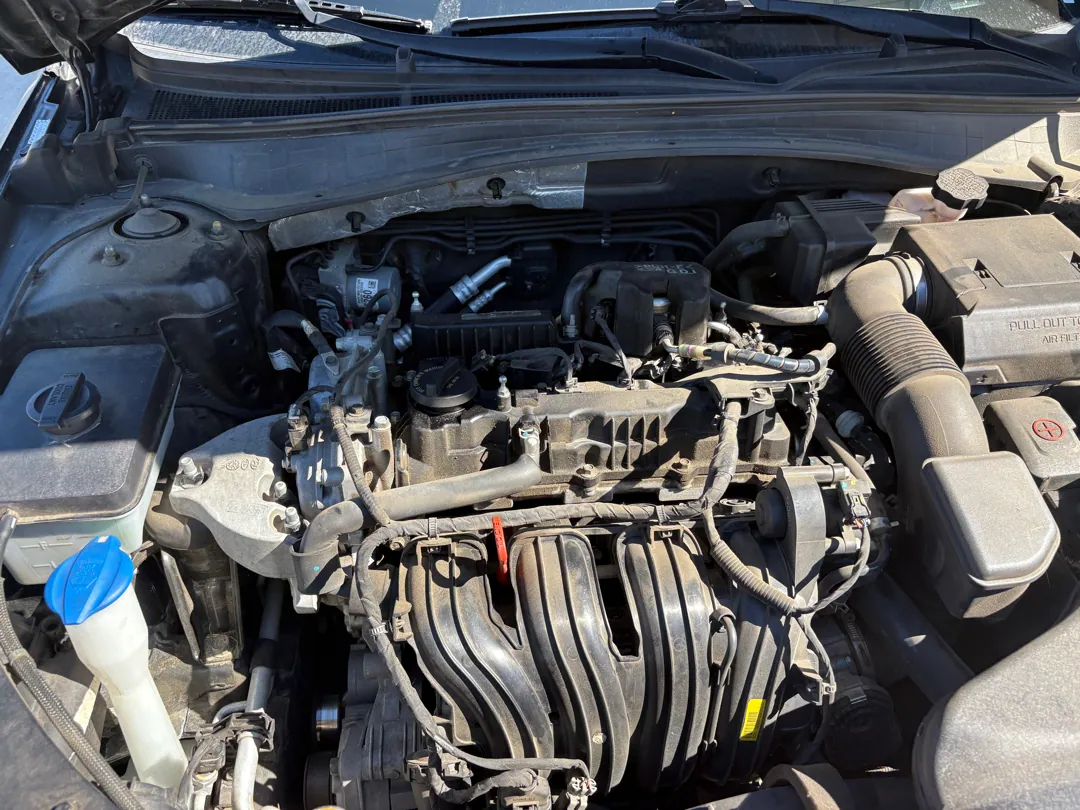
Signs Your Engine Took In Water
- It stalled in the water or right after. Treat it as hydrolocked until someone checks.
- The starter clunks and stops. The engine won't turn over at all. Water is holding a piston.
- It knocks or makes a crashing noise. Wikipedia lists crashing and screeching sounds when parts break. Shut it off.
- The air filter is wet. Open the air box. Water or a soaked filter means water had a path in.
- It ran rough or lost power in the water. A slow trickle can upset the air and fuel mix before a full lock, per Wikipedia.
Hydrolock isn't the only thing water does. We keep a set of 23,409 auto repair reviews, and only 6 of them mention a flood or driving through deep water. In three, the driver describes damage under the car. An oil pan holed by a rock hidden under the water. A torn splash shield. A muffler knocked loose. None of the six describe a locked engine.
Water hides what's in it. A car that made it through still needs a look underneath, and that's a job our mobile diagnostics covers at the curb.
The First Ten Minutes
- Don't crank it again. Water inside an engine can lock it up and cause serious internal damage, per a Ram 1500 owner's manual. A second try at speed is how a saveable engine turns into a replacement.
- Get out if the water is rising. A car is replaceable. The NWS line is plain. Turn around, don't drown.
- Key off and leave it off. Tell anyone helping you not to try it either.
- Take photos. Get the water line on the doors, the street and the spot where it stalled. Your insurer will ask what happened.
- Get it out of the water, then get it checked. Mazda's manual says a car that's been in water should be checked before you drive it (Mazda CX-5 manual). Once it's out, we can come to it.
- Find your declarations page. It shows whether you bought comprehensive coverage. More on that below.
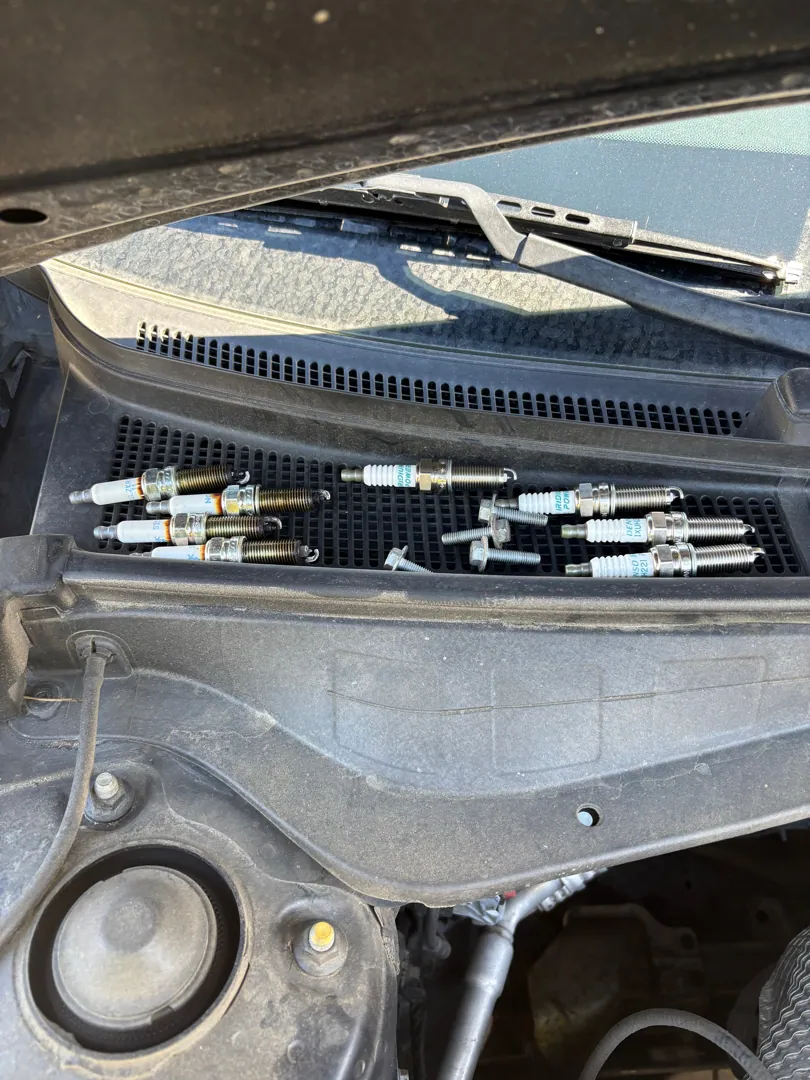
From Plugs Out to a New Engine
What decides the bill is how fast the engine was turning when the water got in. The table matches what happened to the usual fix and to the starting prices posted on the Hemet Mechanic prices page in November 2026.
| What Happened | What Usually Gets Done | Our Posted Starting Price |
|---|---|---|
| Stalled at a crawl, never cranked again | Plugs out, engine turned by hand to push the water out, oil and filter changed, new air filter, then a test start | $150 an hour diagnostic time, plus an oil change at $99 for sedans or $169 for trucks and SUVs |
| Cranks but knocks or misfires | Inspection to find a bent rod or a damaged valve before anything else runs | $150 an hour to find it, then a written quote |
| Bent parts, block still healthy | Engine rebuild | From $800 |
| Broken rod or cracked block or head | Engine replacement with the same size engine | From $1,200 for sedans, from $1,600 for trucks and SUVs |
These are starting points. Your car gets an exact quote before work starts. Engine jobs run 1 to 4 weeks at our garage on Elmwood Ave, and the engine replacement page lists what comes with one.
The first row is why the second crank matters so much. An engine that stopped at a crawl and never ran again is often a few hours of work. The same engine cranked hard a second time can land in the bottom row.
Insurance, Warranty and Who Pays
A homeowners policy typically won't cover a flood. Your auto policy may cover a flooded car, but only if you bought comprehensive coverage. That's from a California Department of Insurance alert from August 2023.
The same alert says only liability coverage is required by law. So plenty of older cars in the valley carry liability only, and liability pays for the other driver, not you. The department says to check your declarations page to see if comprehensive was bought and in effect when the loss happened.
Don't count on the factory warranty either. Ram's owner's manual says damage from water getting into the engine isn't covered by its new vehicle limited warranty. Read your own warranty book before you plan around it.
For the claim, get the diagnosis in writing. Our diagnostic visit ends with written findings and a quote, which gives the adjuster something to work from.
Crossing Water Without Wrecking It
The best crossing is the one you skip. If you can't see the road under the water, or it's moving, find another way.
If it's standing water and you can see the bottom, a few rules keep the intake dry.
- Check the depth first. Ram says never drive through standing water deeper than the bottom of the tire rims.
- Go slow. Ram puts the limit at 5 mph to keep the wave down. Haynes says slow speed keeps the bow wave small.
- Stay near the middle. Haynes notes the road's crown makes the edges deepest. Watch for oncoming cars, because their wave can swamp you.
- Don't hit it fast. Haynes says modern wide tires can start to hydroplane on standing water above about 30 mph.
Once you're through, dry the brakes. Mazda says to drive slowly and press the brakes lightly several times until they work normally, since wet brakes can stop longer or pull to one side. If they still feel off after that, our post on worn brake pads covers what to watch for.
Haynes also warns that flood water can wash grease out of brake parts, suspension joints and wheel bearings, and get into any CV joint with a torn boot. A car that sat in water deserves a look underneath even if it starts fine.
Last Few Questions
- How do you deal with a hydrolocked engine?
- Don't crank it. Get the car out of the water. A mechanic pulls the spark plugs, turns the engine by hand to push the water out, changes the oil and filter, and checks for bent parts before it's started again.
- Does hydrolocking happen instantly?
- It can. At speed, a big gulp of water can stop the engine and break parts at once. A slower trickle can make it run rough and lose power first, per Wikipedia's hydrolock entry.
- How much does it cost to repair a hydrolocked engine?
- It depends on the damage. An engine caught early may need only diagnostic time, plugs out and an oil change. At our posted November 2026 prices, a rebuild starts at $800 and a sedan engine replacement starts at $1,200.
- Can a hydrolocked engine be fixed?
- Often, if it was idling or at a crawl when the water got in and nobody cranked it again. At speed, bent or broken rods are common, and a rebuild or a replacement is the usual fix.
- Will car insurance cover a hydrolocked engine?
- In California, flood damage to your car falls under comprehensive coverage, per the state Department of Insurance. Liability only won't pay for your own car. Check your declarations page.
- Can heavy rain alone hydrolock an engine?
- Rain falling on a car rarely does. Wikipedia notes a low cold air intake raises the risk in heavy rain and standing water. Most cases come from driving into water deep enough to reach the intake.
Links We Used
- National Weather Service, Turn Around Don't Drown, accessed November 2026
- National Weather Service San Diego, Hemet forecast, issued November 17, 2026
- ABC7, Heavy Rain Causes Flooding in Hemet, San Jacinto, Trapped Drivers Rescued, December 5, 2014, accessed November 2026
- Wikipedia, Hydrolock, accessed November 2026
- Haynes, Is It Safe to Drive Through Water, published February 2024, accessed November 2026
- Ram 1500 Owner's Manual, Driving Through Water, accessed November 2026
- Mazda, 2018 CX-5 Owner's Manual, Driving in Flooded Area, accessed November 2026
- California Department of Insurance, Insurance Coverage for Automobile Damage, August 22, 2023, accessed November 2026
- Hemet Mobile Mechanic prices page, our posted rates, November 2026
More Like This
- Transmission Rebuild vs Replace, Decided by the Warranty
- Why Is My Car Overheating? 10 Causes, Cheapest First
- Worn Brake Pads, Book at 1/8 Inch, Stop Driving at Grinding
We pull plugs, read engines and quote rebuilds in driveways across Hemet and the San Jacinto Valley, 7 days a week. If your car stalled in water this week, leave the key off and call (951) 474-1277. We'll tell you what we find before we quote a thing.